


Research and Field Projects: Central Asia and Silk Road Regions
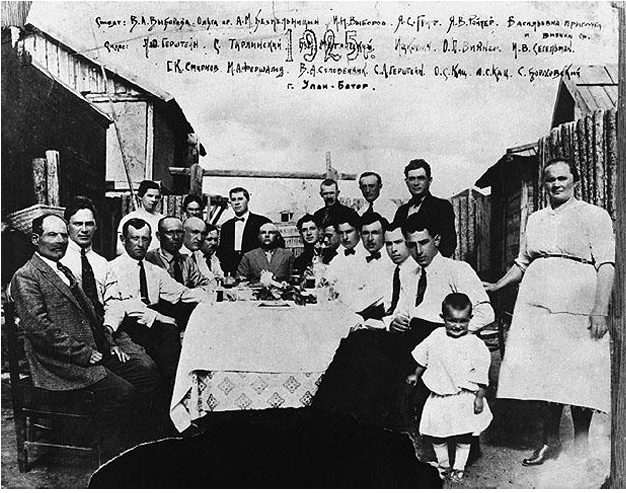
Photo (above): Jewish Community Gathering, Gandan District, Urga (Ulaanbaatar) (1925)
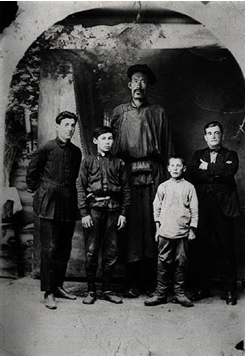
Photo (above): Mongolian Independence Period | Jewish merchants residing in nearby Manchuria often entered Mongolia to trade various products and on one visit took this photo with famous Mongolian giant ‘Gongor’ (7-feet tall).
Photo: Jacob Reuter (right) and Mittia Preshalov (left) with the 7-foot-tall Mongolian herder.
Reuter and Preshalov had been living in Manchuria since 1905 and were trading between Mongolia and the cities of the Manchurian peninsula (Mongolia, 1912)
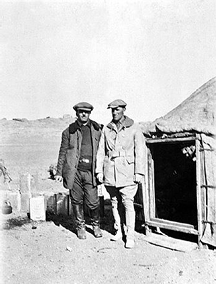
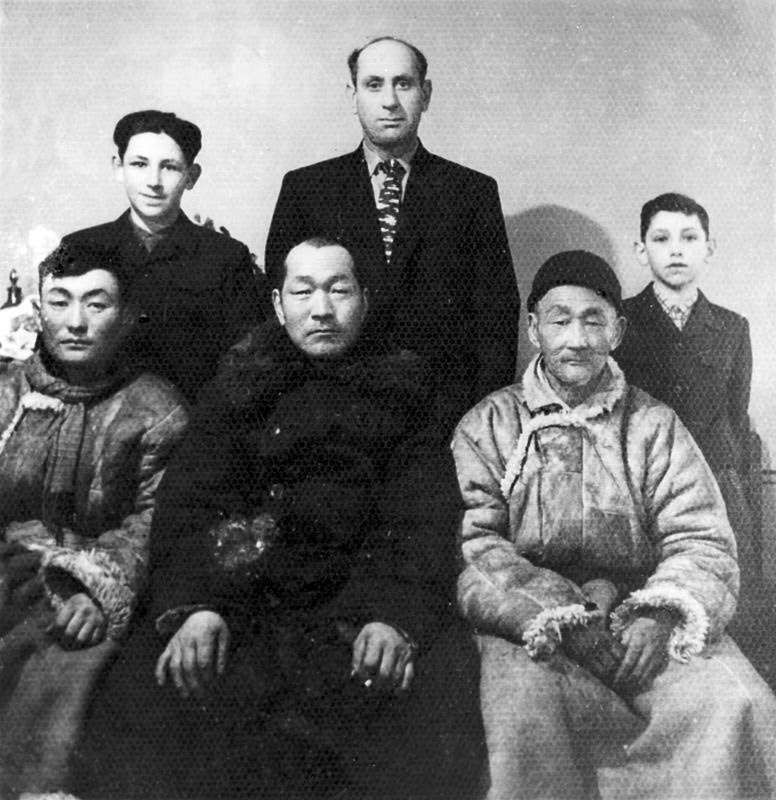
Photo (above): Jewish residents in Ulaanbaatar (Urga) | Six hundred Russian Jews lived in Ulaanbaatar, the capital of the Mongolian People’s Republic (1926) many of whom worked as watchmakers, jewelers, barbers, and construction workers. Most Urga Jews, viewed as Bolshevik sympathizers during the Russian Civil War, were killed when Baron Ungern’s White Russian Asiatic Cavalry entered Mongolian territory (1921). Mongolian Prince Togtokh and Russian Orthodox Archpriest Fyodor Parnyakov hid some endangered local Jews and earnestly tried to save others
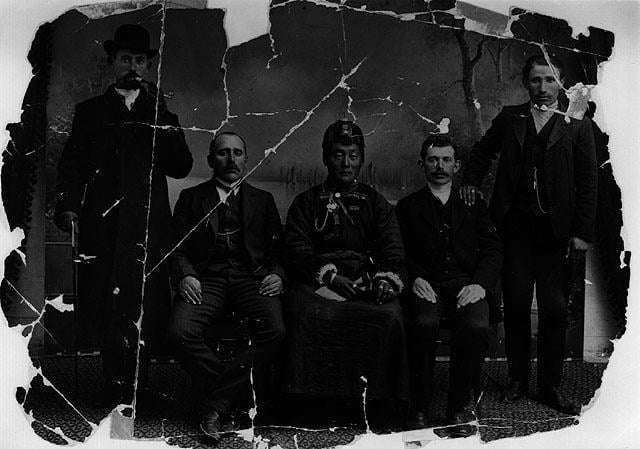
Photo (above): Jewish merchants from Manzhouli (Manchuria, China)with Mongolian official during their visit to Mongolia during Mongolian Independence Period (1911-1924)
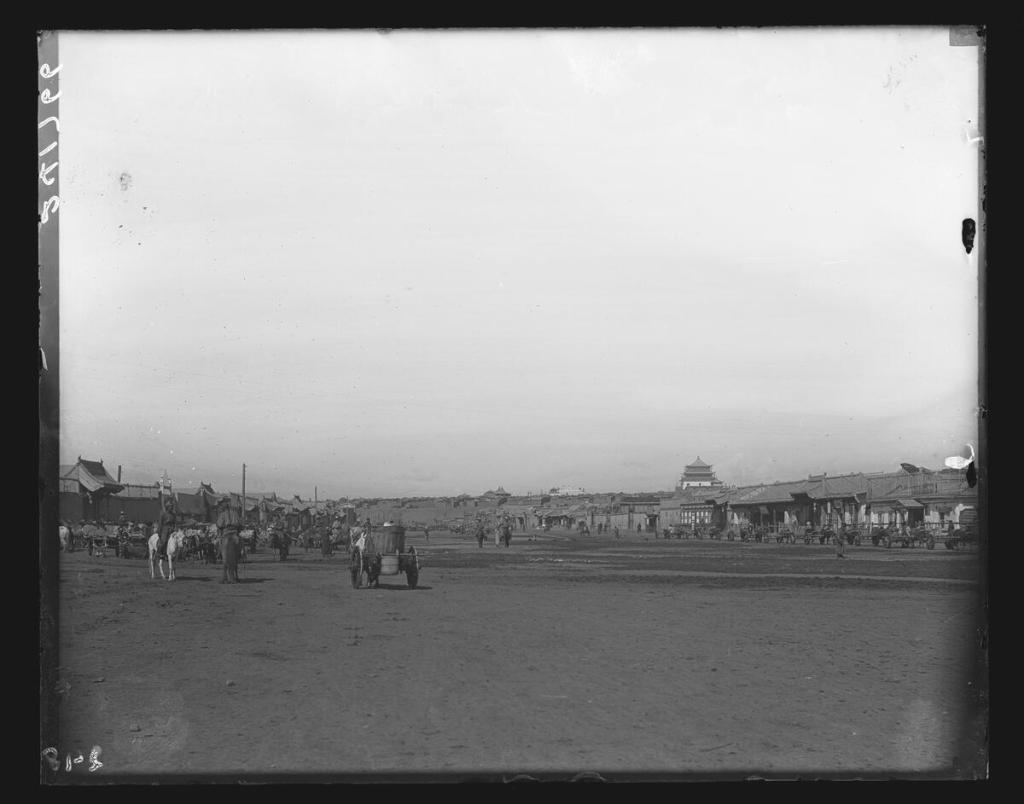
Photo (above) | Regular street life scene in Urga, with Gandan temple in right-background (1919)
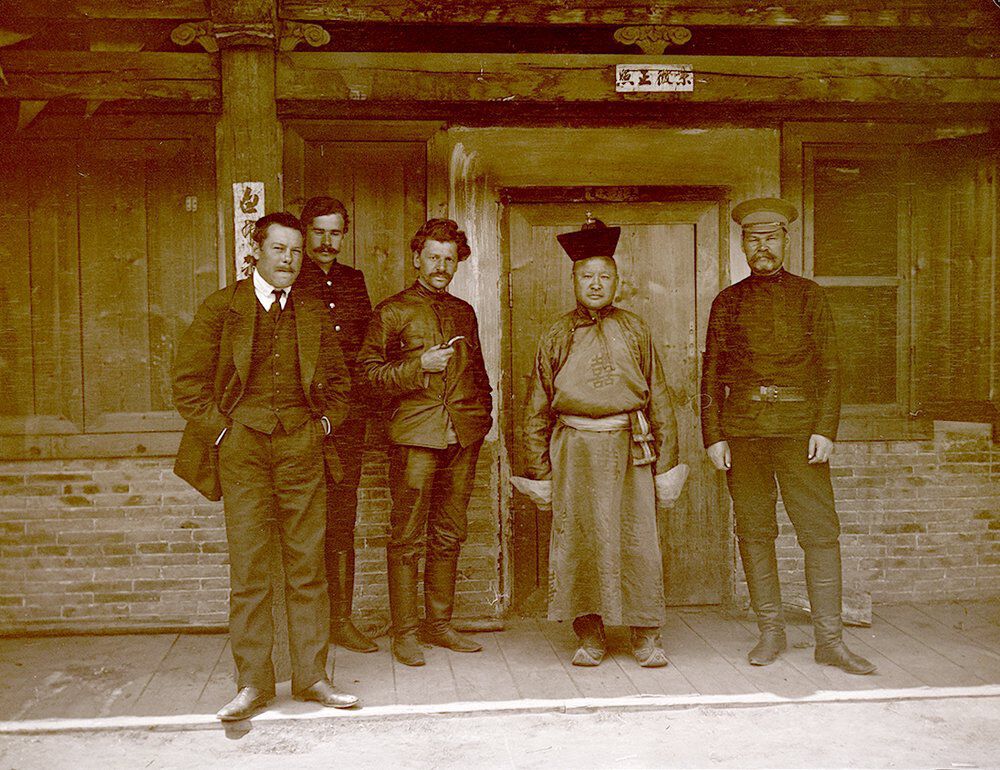
Photo (above) | Telegraph Office in Urga, Mongolia. The Chinese telegraph was already taken over by the Mongolians on December 6, 1911, followed later by the telegraph to Russia. In this photograph, the joint control in 1913 of one of the telegraph stations is visually inscribed in Mamen’s photograph. His caption reads: ‘The whole crew of Mongolian telegraph. Tolstikhin, Baterching Saisang, Yegeroff, Davidenko and Shelkunoff.’ A couple of the men in this photo are possible Russian or Ukrainian Jews. Original Photo: Oscar Mamen
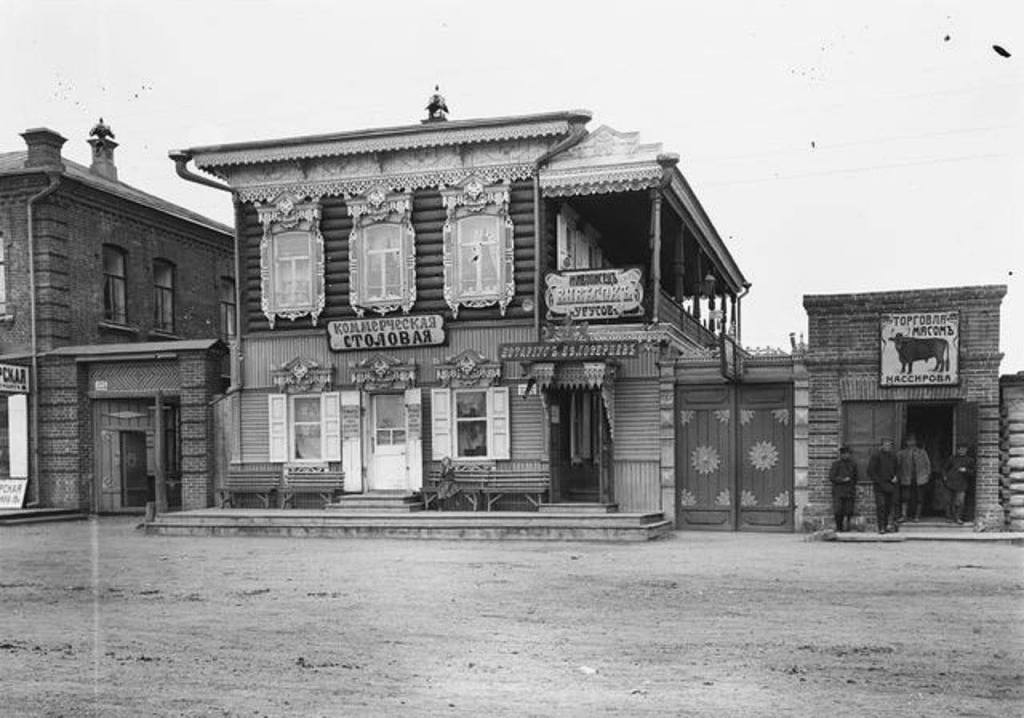
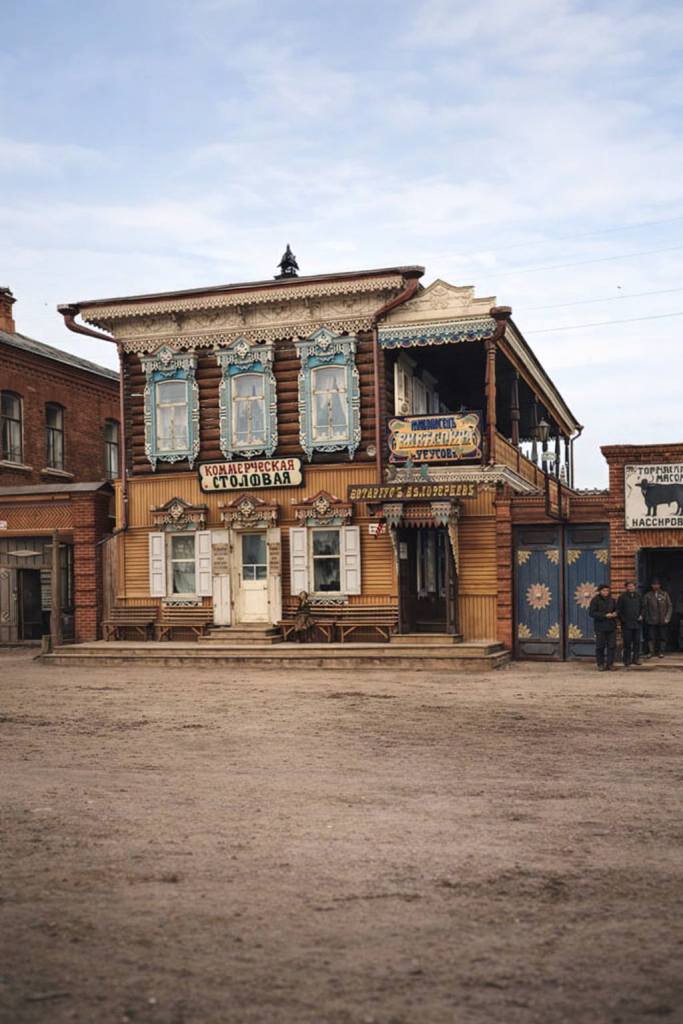
Photos (black and white and colored, above) | Commercial Street, Russian District in Urga (1908). Finnish archaeologist, traveller, ethnologist, author, photographer Sakari Lemmitty Pälsi (1882-1965). Finnish archeologist, traveler, ethnologist, author, photographer Sakari Lemmitty Pälsi (1882-1965). Pälsi traveled to Mongolia in 1908
Note | Historical records show that small groups of Ashkenazi Jews from Siberia settled in Mongolia in the early 1920s. However, after the collapse of communism in Mongolia, several descendants of Mongolian Jews from Siberia emigrated to Israel. Most of the few Jews living in Mongolia today are Israeli citizens who have come here to do business.
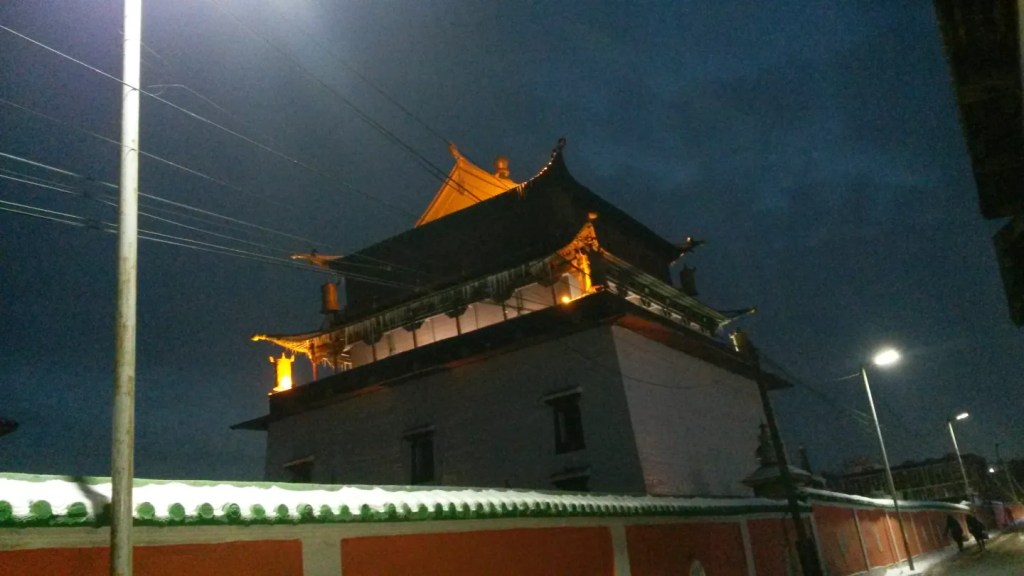
Photo (above): night view on street in Gandan (Temple) District, Ulaanbaatar (2018)
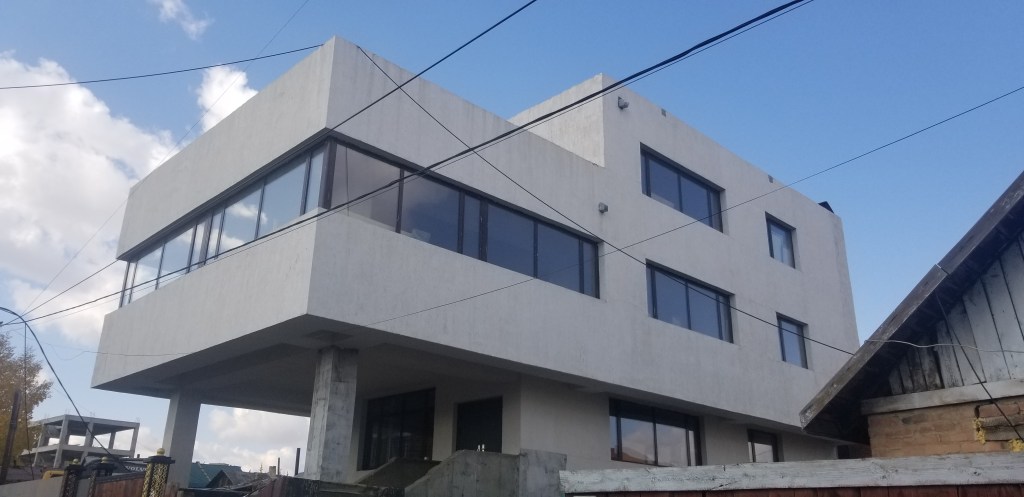
Photo (above) : campus ‘prospective’, Ulaanbaatar, Mongolia ‘semi-bauhaus’ style (Mar 2026)
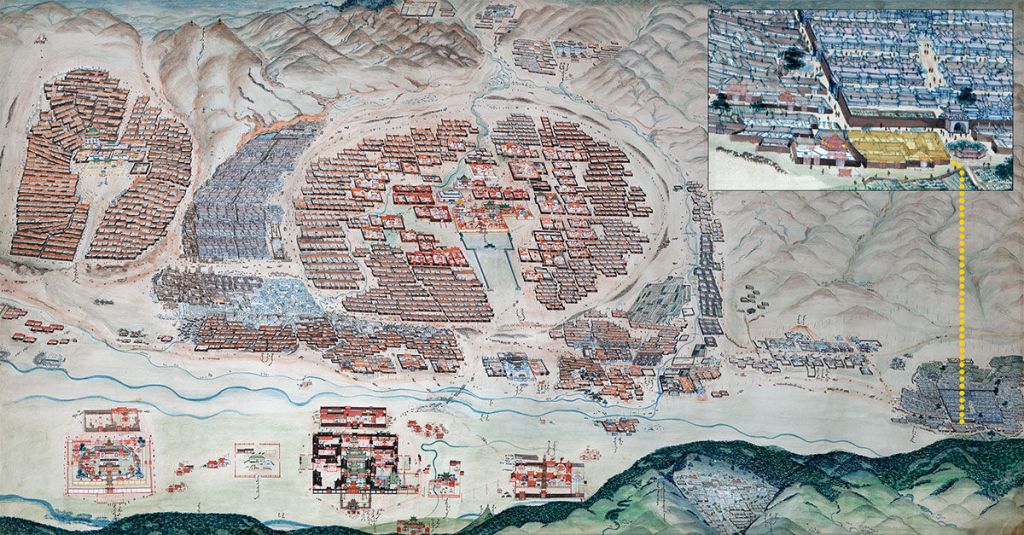
Painting (above) | Judger Painting of Urga (1913). Following the yellow dotted line is Maimaachen, the Chinese part of Urga (marked in yellow). Left from Maimaachen was the Russian district, housing the Russian Consulate. The large circular formation in the middle was called Zuun Khuree, the administrative centre where the State Palace, the Yellow Palace, and the Maidar temple were located, and the large open space that currently is Sükhbaatar Square. Just below is the Choijin Lama temple, one of the few temple complexes still standing in Ulaanbaatar. South of Zuun Khuree were the lay districts, with the markets. Far left: Gandantegchenlin (Buddhist monastery, the centre of religious instruction still present in present-day Ulaanbaatar. Between Gandantegchenlin and Zuun Khuree was another Chinese district. Below the Selba River were Bogd Khaan’s palaces, from the left: The White Palace, the Winter Palace, where Bogd resided (also called Green Palace), and the Summer Palace. The sacred mountain Bogd Khaan Uul is seen below Maimaachen. Full Photo Credit: B. Injinaash
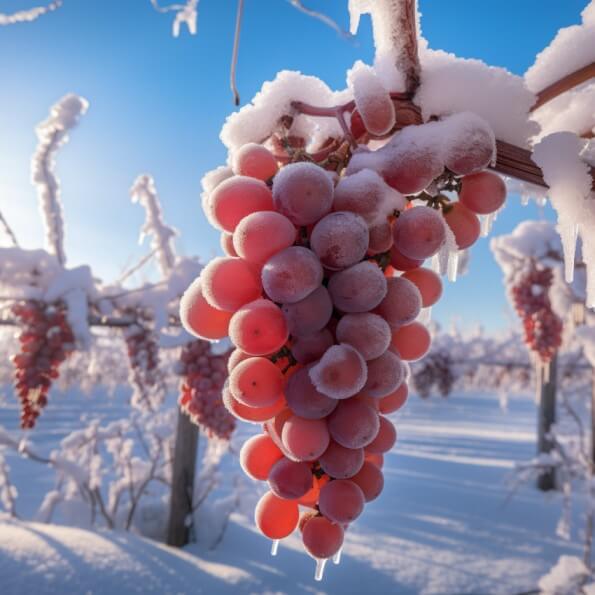
Photo (above): Ice Wine Production Project (2026)
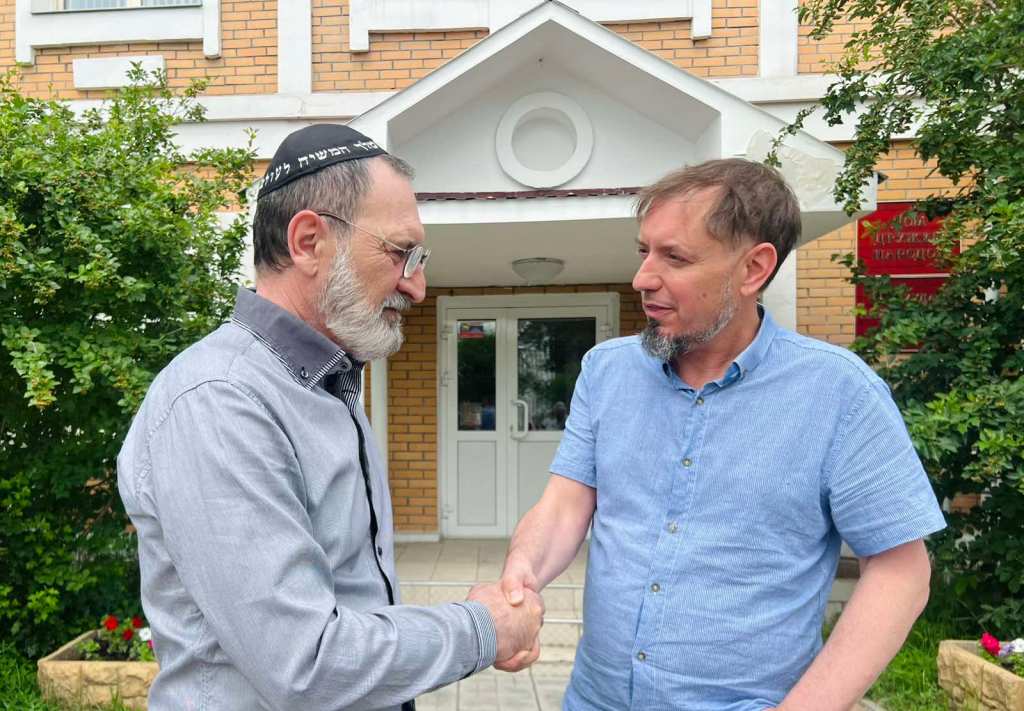
Partnerships

Investment Mentorships
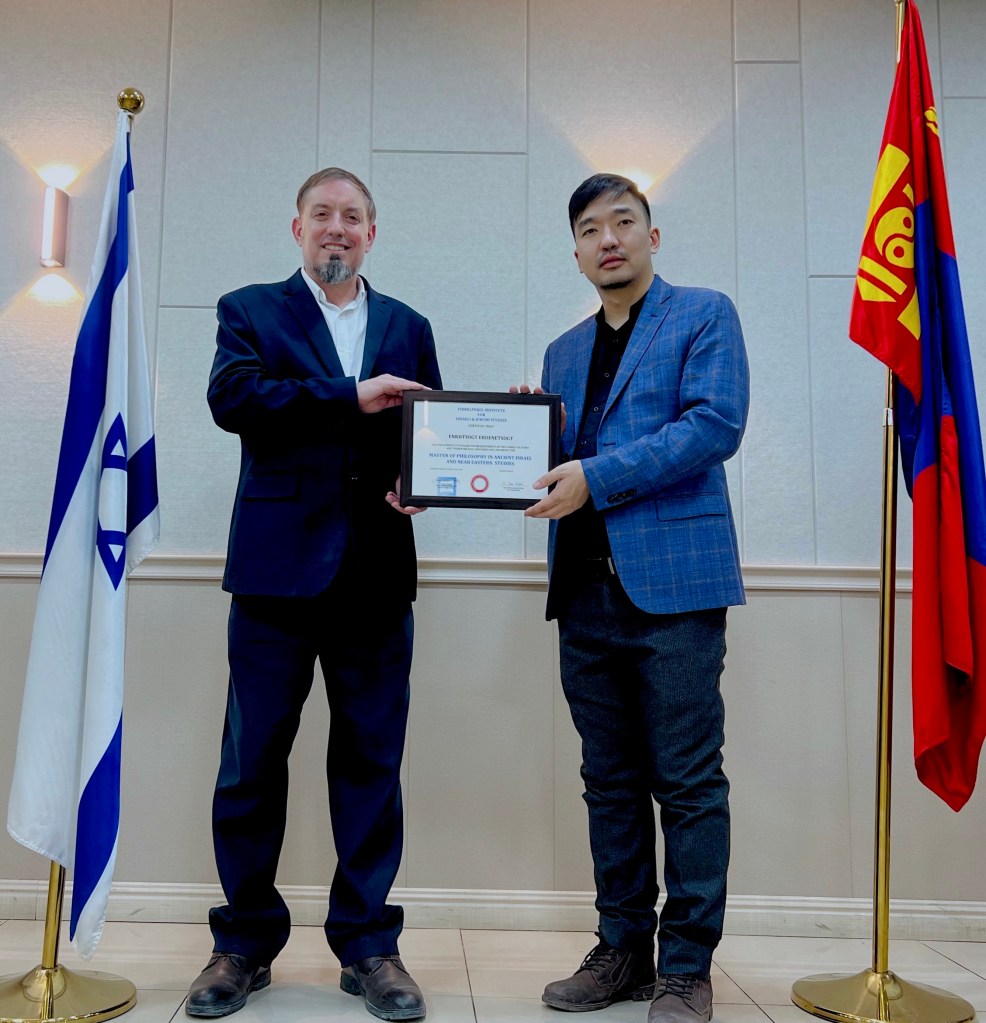
Concrete Results
 Finkelperel Institute