
The Finkelperel Institute for Israeli and Jewish Studies offers honorariums and memorial scholarships to exceptional applicants for the furtherance of Israeli and Jewish research. These in the memory of the following highly esteemed and notable scholars and societal visionaries who have contributed to the vision we live and know here at of the Institute:
John.D.Klier (z”l)
The John.D. Klier Memorial Scholarship for the most exceptional student doing research in Jewish Studies in their graduate year.
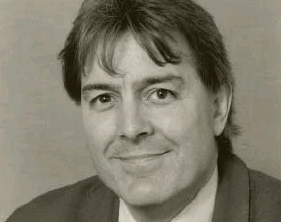
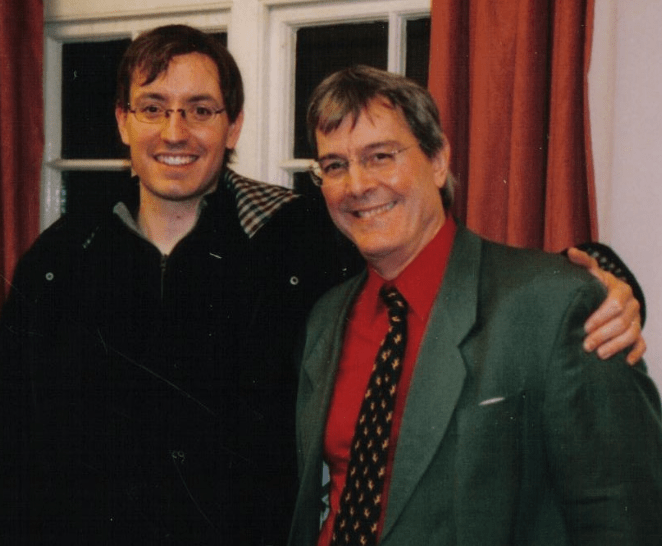
John Doyle Klier, a much loved and admired scholar of east European Jewish history, died September 23, 2007, in London. As Sidney and Elizabeth Corob Professor of Modern Jewish History in the Department of Hebrew and Jewish Studies at University College London, Klier was a tireless advocate of Jewish scholarship in eastern Europe, and passionately worked to develop east European Jewish history in the United States, continental Europe, and the United Kingdom. He was the world’s leading authority on Russia’s perceptions and treatment of the Jews from the late 18th century until the demise of the Tsarist Empire. Generously collaborating with historians from Israel, the United States, and Europe, he turned the study of pogroms, political violence directed against the Jews, into a historical field in its own right. He was a supremely talented teacher, who supervised numerous master’s and doctoral dissertations, and whose lectures deftly interwove politics, religion, and social life with the greatest sophistication, yet remained accessible to a wide audience. He was co-editor of East European Jewish Affairs and held a number of important posts, including the presidency of the British Association of Jewish Studies and the Anglo-Jewish Historical Society. He was a consultant to Yad Hanadiv (now the Rothschild Foundation Europe) and Avi Chai Foundation, and a moving force on the boards of the Simon Dubnow Institute in Leipzig and the Sefer foundation, dedicated to advancing Jewish history and culture in eastern Europe.
John Klier was born December 13, 1944, in Syracuse, New York. His father taught aeronautical engineering at Syracuse University (Klier used to joke that his father had a t-shirt emblazoned with the slogan, “I really AM a rocket scientist”). Klier attended Notre Dame University in South Bend, Indiana, for his BA and MA in history. He then pursued doctoral study at the University of Illinois, where his interest in Russian Jewry was stimulated. He became aware, in his investigations of pre-revolutionary Russia, that little primary research had been conducted on Russian Jewry for most of the 20th century. His PhD dissertation examined the process by which the Russian state integrated Jews into the Russian state system, and fostered specific attitudes and assumptions about Jews. This work was expanded into his first book, Russia Gathers Her Jews: The Origins of the Jewish Question in Russia (Northern Illinois Univ. Press, 1986), now considered a seminal text in modern Jewish history. His co-edited work with Shlomo Lombroza, Pogroms: Anti-Jewish Violence in Modern Jewish History (Cambridge University Press, 1991), is widely regarded as the gold standard in a highly contentious field.
How could a historian have probed this subject during the so-called “Period of Stagnation,” when forays into politically sensitive topics such as “the Jewish Question” were taboo? In a feat of utter brilliance, Klier officially purported to study “the Russian popular press,” a seemingly innocuous subject. Therefore he gained access to the material necessary to produce a truly groundbreaking, substantive history of Russian Jewry. He made superb use of his experience as a postdoctoral researcher at Leningrad State University, USSR, in 1977–78 and 1980–81. He also became so proficient in Russian that he was regarded as an eloquent lecturer, almost in a class of his own among the non-Russian born scholars of east European Jewry.
In 1991, he was one of the first foreign scholars to undertake in-depth research on the Jews in Soviet archives, and mined resources in the coming years in Kiev, Moscow, St. Petersburg, and Minsk. In 1993 he received a grant from the National Endowment for the Humanities to prepare surveys of Jewish materials in post-Soviet archives. Scores, if not hundreds, of researchers of east European Jewry have benefited from his insight and guidance. His second major monograph, Imperial Russia’s Jewish Question, 1855–81 (Cambridge Univ. Press) appeared in 1995.
In his last few months Klier completed the manuscript of Southern Storms: Russians, Jews and the Crisis of 1881–82, which also will be published by Cambridge University Press. Building on his earlier monographs, articles, and edited volumes, it explores the nature of pogrom violence in Russia and the responses to the events of 1881–82 by the imperial authorities, as well as by Russian and Jewish society. He was working, as well, on a study of Jews and military recruitment in the Russian Empire, focused on the cantonist battalions. Drawing on his original research he published a book in Russian, Rossia sobiraet svoikh evreev (Gesharim, 2000), a critical text for the Russian-speaking student and scholarly community in eastern Europe and Israel. Klier also was author, with his wife, of a popular history, The Search for Anastasia: Solving the Riddle of the Lost Romanovs (Smith Gryphon, 1995). He was bemused that this was by far the bestselling of his books.
John Klier began his university teaching career at Fort Hays State University in Hays, Kansas. While there he proved himself a prodigious scholar and excellent teacher, and was promoted to full professor. His great desire was to eventually relocate to Britain, in order to be nearer the sources of his research and because his wife wished to return to her native England. In 1989 a lectureship was established in east European Jewish history at University College London, the original and largest component of the University of London, and Klier sought the appointment—despite the drop in rank from professor to a “lectureship,” which is roughly equivalent to an assistant professorship. By British standards his subsequent ascension was meteoric. He was promoted in 1993 to “reader” (now termed associate professor), and assumed the Corob Professorship in 1996. As the chair of the Department of Hebrew and Jewish Studies for most of the 1990s he was famed for nurturing a refreshingly supportive, open-minded, and convivial atmosphere.
John Klier was thoroughly devoted to his wife, Helen Mingay, and their two children, Sophia and Sebastian. He also is survived by family members in upstate New York and the U.K.
A true renaissance man, John Klier was an expert in many national literatures—which he preferred to read in their original languages. He also was well-versed in classical music, art, opera, and theatre. He was a skilled competitive fencer. He also could carry a spirited, incisive conversation about both English and American football. His sincere friendship and good nature were infectious. His loss leaves a profound sadness. His scholarship is certain to stand the test of time, and his warmth will be cherished and recalled throughout the world.
—Michael Berkowitz
University College London, Dec 1, 2007
Work in Russia
In 1991 John was one of the first foreign scholars to undertake in-depth research on the Jews in Soviet archives, and mined resources in the coming years in Kyiv, Moscow, St Petersburg and Minsk. In 1993, he received a grant from the National Endowment for the Humanities in the United States to prepare surveys of Jewish materials in post-Soviet archives. His second major monograph, “Imperial Russia’s Jewish Question, 1855–1881”, appeared in 1995.
Walter Ledermann (z”l)
The Walter Ledermann Honourary Scholarship for the student showing the most promise overall in their graduation year in their pursued academic field.
Ledermann studied at the Köllnisches Gymnasium and Leibniz Gymnasium in Berlin, from which he graduated in 1928 at the age of 17. He went on to study at the University of Berlin, but due to the rise of Hitler and antisemitism, was forced to flee Germany shortly after he completed his undergraduate studies in 1934. Through the International Student Service in Geneva, he was able to obtain a scholarship to study at the University of St Andrews in Scotland. His doctoral work at St Andrews was supervised by Herbert Turnbull. He was awarded his PhD in 1936. Whilst working at the University of Edinburgh with Professor Sir Godfrey Thomson, Ledermann was granted a DSc in 1940 for his work with Thomson on intelligence testing.
Read more on Walter’s amazing life in Walter Ledermann – Encounters of a Mathematician
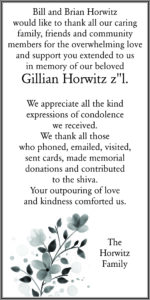
gillian horwitz (z”l)
The Gillian Horwitz Memorial Scholarship
GILIAN HOROWITZ
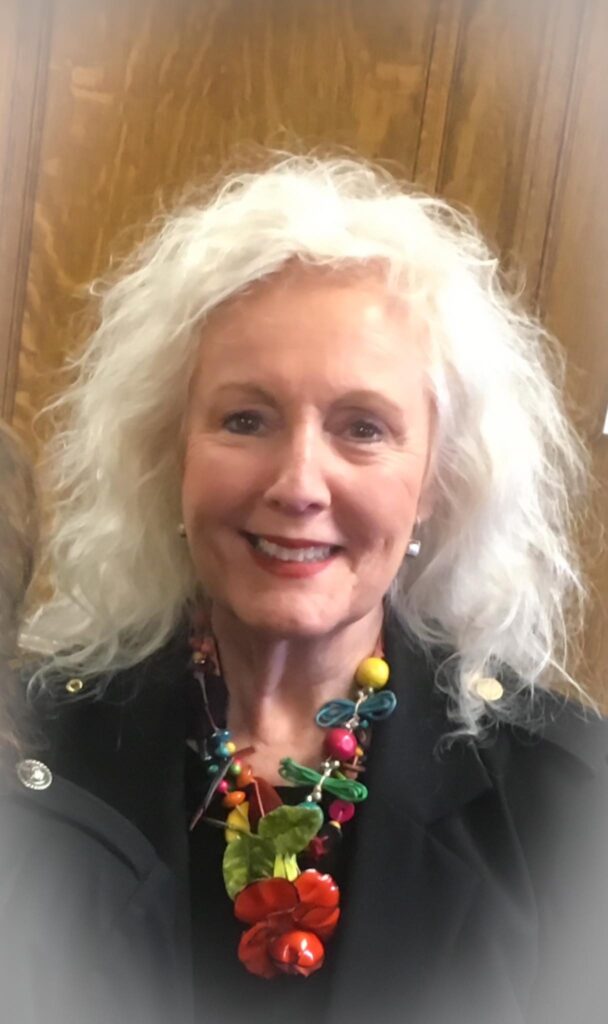
She volunteered extensively in many community roles, including as President, Edmonton Hadassah-WIZO from 1990-1992, and as National vice-president, Canadian Hadassah-WIZO, from 1992-1998.
In addition to the leadership roles at the helm of Jewish Federation of Edmonton, she served as a board member of Alberta Multilingual Society, Pilgrims Hospice Society, Jewish Seniors Citizens’ Centre, Jewish National Fund, Beth Shalom Synagogue, and Jewish Family Services of Edmonton.
Gillian has represented our Jewish Community in many ways. You may remember that, several years
ago, she hosted the “Jewish Radio Hour” on CKER, and the TV show “On Being Jewish”. Gillian also has an extensive history of volunteerism. In Canadian Hadassah WIZO, she was an Edmonton Chapter president and a National Vice-President. She chaired the Holocaust Education Committee and produced a documentary on Holocaust Survivors in Edmonton. Gillian has served on the boards of Jewish
Family Services, Beth Shalom Synagogue, The Jewish Seniors’ Centre, Jewish National Fund and is a past president of the Jewish Federation of Edmonton. For these involvements, and many others,
she was honored last year with a” City of Edmonton Citation Award.
Gillian had once advised the founder of the Finkelperel Institute to “Go where the soil is right”
erich ledermann (z”l)
The Erich Ledermann Memorial Scholarship
ERICH LEDERMANN
Erich Kurt Ledermann M.D. M.R.C.S. L.R.C.P. FFHom (16 May 1908 – 7 May 2005) was a German-born homeopath who fled from Nazi Germany in 1932, to become a House Physician at the Glasgow Homeopathic Hospital, Honorary Consultant at the Royal London Homeopathic Hospital, and a Consultant Psychiatrist at the Marlborough Day Hospital.
Ledermann embraced a holistic approach to healing and added acupuncture to his repertoire, becoming a specialist in Chinese medicine. He was a longstanding advocate of “nature cure” and joined Nina Hosali‘s Nature Cure Clinic in 1936, where he practiced for over fifty years.
Erich Ledermann was a Fellow of the Royal Society of Psychiatrists and a Fellow of the Faculty of Homeopaths.
Erich Kurt Ledermann was a friend of Marjorie Golomb, Sir John Weir, and many others.
Erich Kurt Ledermann taught Brian Kaplan, who interviewed Dr. Ledermann, and wrote his Obituary.
Erich Kurt Ledermann was born in Berlin, Germany, on 16 May 1908, the eldest son of German-Jewish doctor William Israel Ledermann (1871 – 1949) and Charlotte Lotte Apt (1883 – 1980).
Ledermann decided to follow his father in pursuing medicine and conducted his training at University of Freiburg, qualifying M.D. in 1932. After graduation Ledermann worked as a pediatrician, until the appearance of the Nazis convinced him to flee for Britain.
Erich Kurt Ledermann re-qualified in 1934 with his Bachelors in Medicine and Surgery from University of Glasgow, and with Licences from the Edinburgh Royal College of Physicians and Royal College of Surgeons.
In June 1943, Ledermann married Marjorie Alice Smith. They had two children, David and Elizabeth.
Erich Kurt Ledermann was an opponent of vaccination, and became a member of the National Anti Vaccination League and the earlier London Society for the Abolition of Compulsory Vaccination in 1952, alongside Henry Tudor Edmunds, Henry Valentine Knaggs, Dorothy Shepherd and Harold Fergie Woods.
Erich Kurt Ledermann practiced at 121 Harley Street, 97 Harley Street, and 13 Ardwick Street in London.
Erich Kurt Ledermann taught Brian Kaplan and Robin Shohet.
After leaving Nazi Germany in 1933, Eric Ledermann requalified in Edinburgh. He was appointed to the Glasgow Homeopathic Hospital as a house physician, and then came to London in 1936 to begin his own practice, combining this with work at the Royal London Homeopathic Hospital.
He joined the Nature Cure Clinic in 1936 and practised there for over 50 years.
He published several books on good health through natural therapy. Ledermann’s interest in philosophy led him to develop a form of psychotherapy he termed “true self psychotherapy,” which aimed to make “the unconscious conscience conscious.” He was the author of Philosophy and Medicine (1970) and Existential Neurosis (1972).
Predeceased by his wife, Marjorie, he leaves two children and five grandchildren.
Eric Kurt Ledermann (16 May 1908 – 7 May 2005) was a German-born British physician, psychiatrist, homeopath, and naturopath who integrated existential philosophy with medical practice, developing a form of psychotherapy focused on accessing the “unconscious conscience.” Born in Berlin, he qualified in medicine there before fleeing Nazi Germany in 1933, requalifying in Edinburgh in 1934 with an MD; his early career included house physician roles at the Glasgow Homeopathic Hospital and, from 1936, positions at the Royal London Homoeopathic Hospital, where he served as a consultant, alongside over 50 years at the Nature Cure Clinic. Ledermann, holding qualifications including FFHom and FRCPsych, also consulted at the Marlborough Psychiatric Day Hospital and authored works such as Philosophy and Medicine (1970) and Existential Neurosis (1972), advocating natural therapies and “true-self psychotherapy” to address neurosis through conscious moral awareness rather than symptom suppression. His approach emphasized patient responsibility in healing via diet, exercise, and philosophical self-examination, though homeopathy’s empirical efficacy remains debated in mainstream medicine.
Legacy
Influence on Integrative Health Movements
Ledermann’s longstanding practice at the Royal London Homoeopathic Hospital and the Nature Cure Clinic, spanning over 50 years, contributed to the endurance of homeopathy in the UK by exemplifying its integration as a “holistic stimulus” for self-healing alongside conventional interventions when necessary. His writings, including contributions to the British Homeopathic Journal, emphasized individualized natural therapies like homeopathy and naturopathy, fostering persistence among practitioners amid mainstream skepticism toward non-empirical methods.
Through his formulation of true-self psychotherapy, detailed in Existential Neurosis (1972), Ledermann advanced existential frameworks in holistic psychiatry by prioritizing the emergence of patients’ unconscious conscience via philosophical inquiry, art therapy, and provocative techniques. This approach influenced select counseling practices in post-1970s wellness trends, where ethical self-awareness intersected with mind-body healing, as evidenced by mentorship of physicians who adopted his mind-body integration for psychiatric care.
Despite these traces, Ledermann’s legacy in integrative health remains confined to alternative niches such as naturopathy and homeopathic circles, with no widespread institutional adoption or empirical validation in evidence-based movements, reflecting the philosophical rather than data-driven nature of his contributions. His ideas paralleled later developments like psychedelic-assisted therapy but lacked scalable impact beyond dedicated holistic practitioners.
Personal Reflections and Later Years
Ledermann sustained his London-based private practice well into advanced age, consistently advocating for patient autonomy and existential self-realization in therapeutic contexts over dogmatic medical structures. His personal conduct mirrored these tenets, as he adhered to a lifelong vegetarian regimen, pursued daily physical exercise, and engaged in ongoing ethical deliberations to align actions with philosophical ideals.
In late-career reflections, Ledermann reiterated the primacy of “true-self psychotherapy,” a method rooted in phenomenological inquiry to unearth unconscious authenticities, underscoring freedom from societal impositions as essential to genuine healing. He died on 7 May 2005, aged 96, concluding a professional trajectory marked by unyielding integration of philosophy and naturopathic practice without notable personal upheavals.
BODHAN KRUSHELNYCKY
KRUSHELNYCKY, Dr. Bohdan “Dan”
BSc., PhD., M.D.
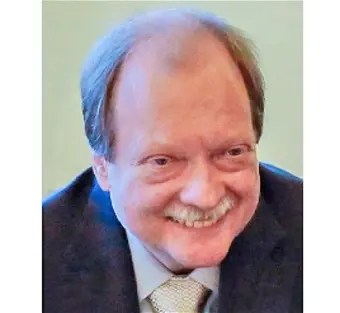
On March 25, 2019, Dr. Bohdan “Dan” Krushelnycky passed away at the age of 57 years. Dan is survived by one daughter, Genevieve “Genka”; one brother, Eugene; cousins, extended relatives and numerous family and friends in Edmonton, Hawaii, Toronto and Trail, BC. Predeceased by his wife, Dorothy; parents, Johanna and Wolodymyr. Dan was a remarkable clinical neurologist who spent time in Edmonton, Trail, BC and Hawaii. He will be forever remembered as a man with many talents, from a brilliant neuroscience researcher to woodworker to iconographer. He did it all well. He had endless energy which he was always using to delve deeper into neuroscience’s biggest conundrums, often working well into the night. Aside from his commitment to science, he was also an amazing cook, musician and incredibly loving father.
‘Danny’, while in his medical school residency at the University of Alberta introduced a younger and future director of the Finkelperel Institute to an understanding of the importance of historiographical approaches, the intriguing scientific world, critical thinking and in making deeper investigations of wide subject areas whilst he was yet still in childhood.
 Finkelperel Institute